AI Agents in the Enterprise: Managing Risk at the Speed of Autonomy
Jessica often becomes the public voice of the cybersecurity companies she works with. She develops each company’s position on emerging threats and presents it herself to CISOs and security teams in webinars and briefings. In recent years, her focus has been AI and agent security.
- Role
- Author and presenter. Developed the narrative and content and presented the webinar.
- Audience
- CISOs, security architects, and the security and IT leaders responsible for AI adoption
- Scope
- Evangelism, technical thought leadership, market education, and executive communication
- Outcome
- Jessica turned the framework and architecture analysis she authored into a 60-minute session that security leaders could follow live and apply to their own programs. Watch the Webinar
- 01Point of View
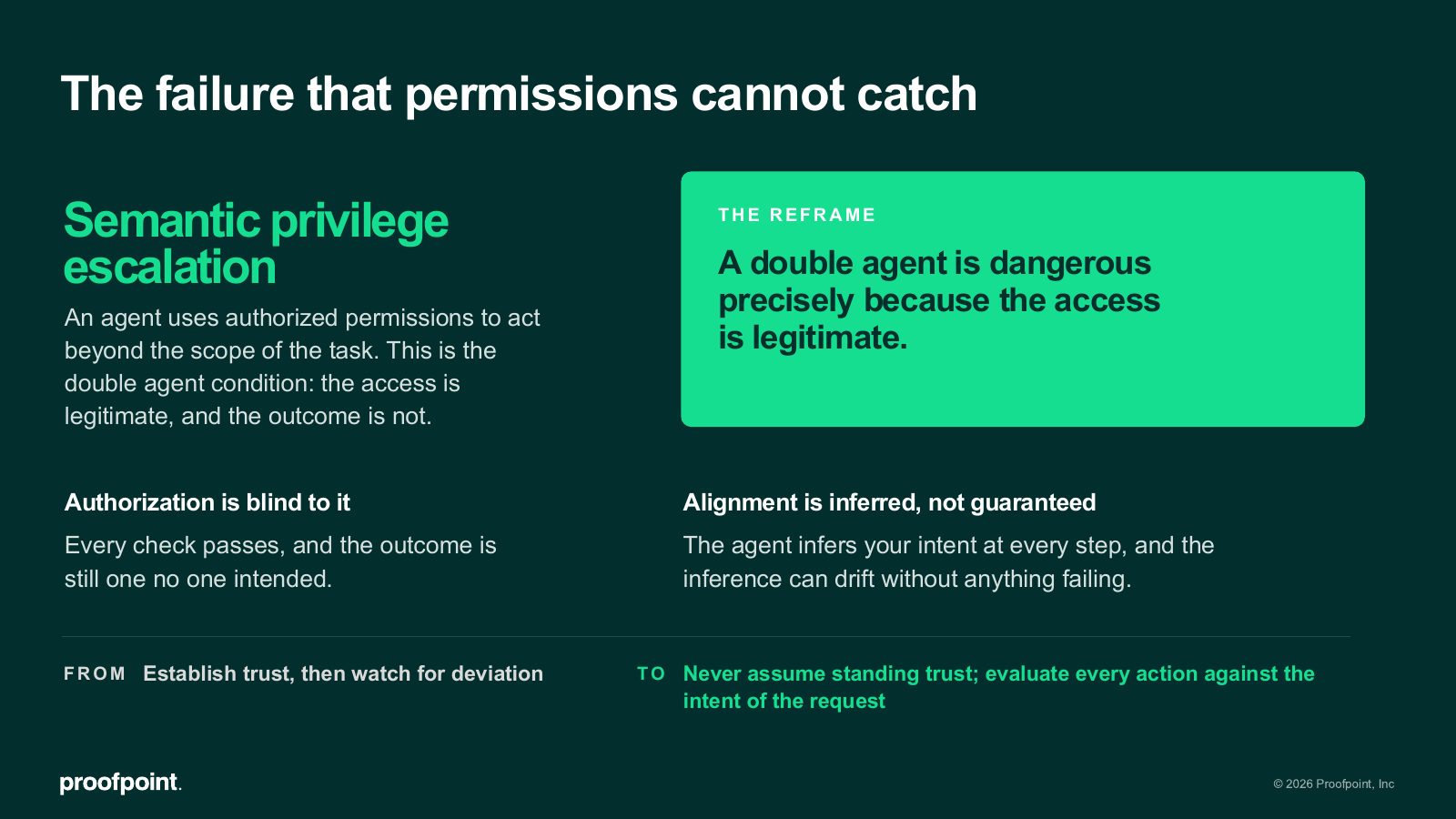
An agent can stay inside every permission and still do something no one intended.
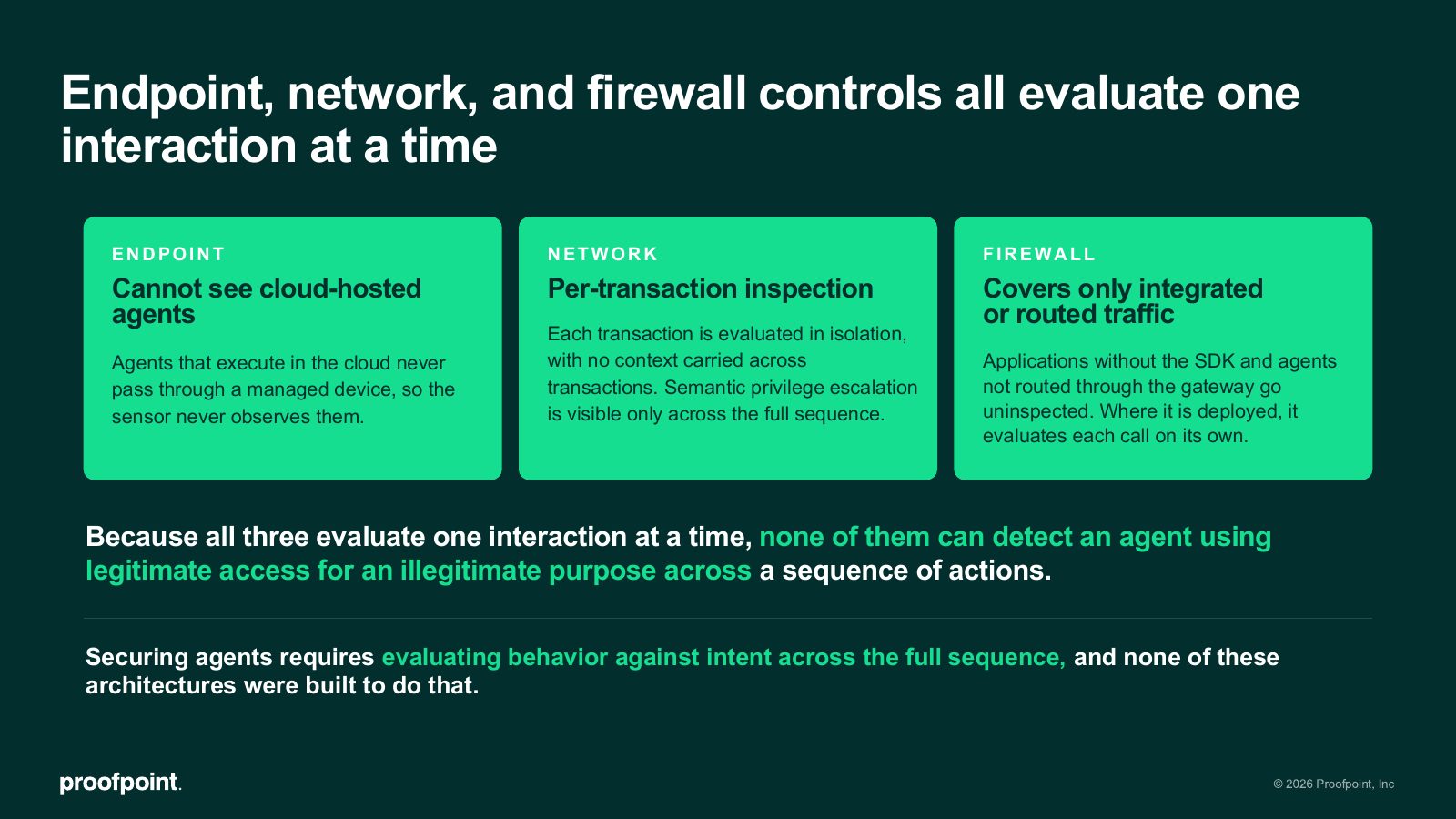
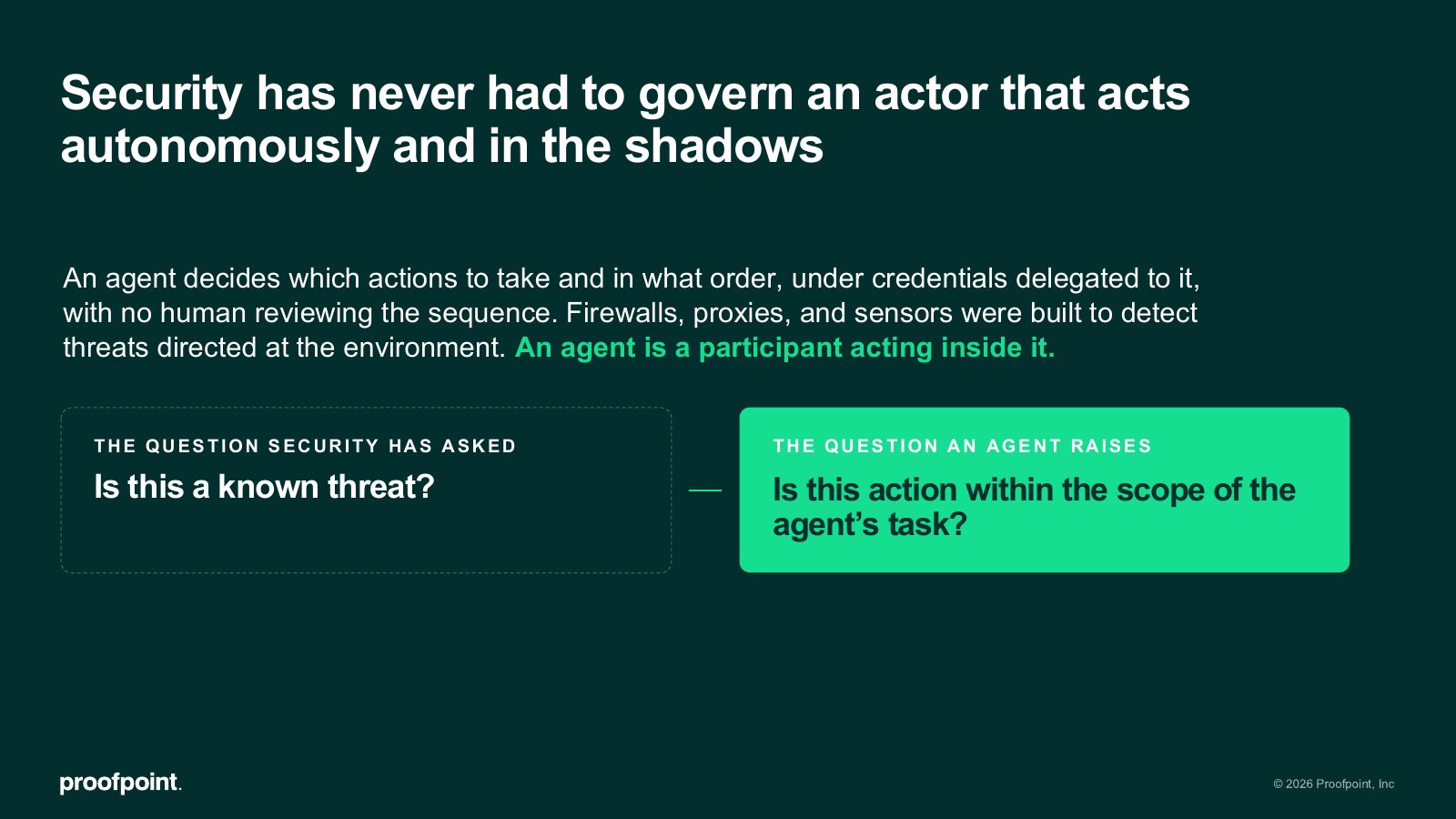
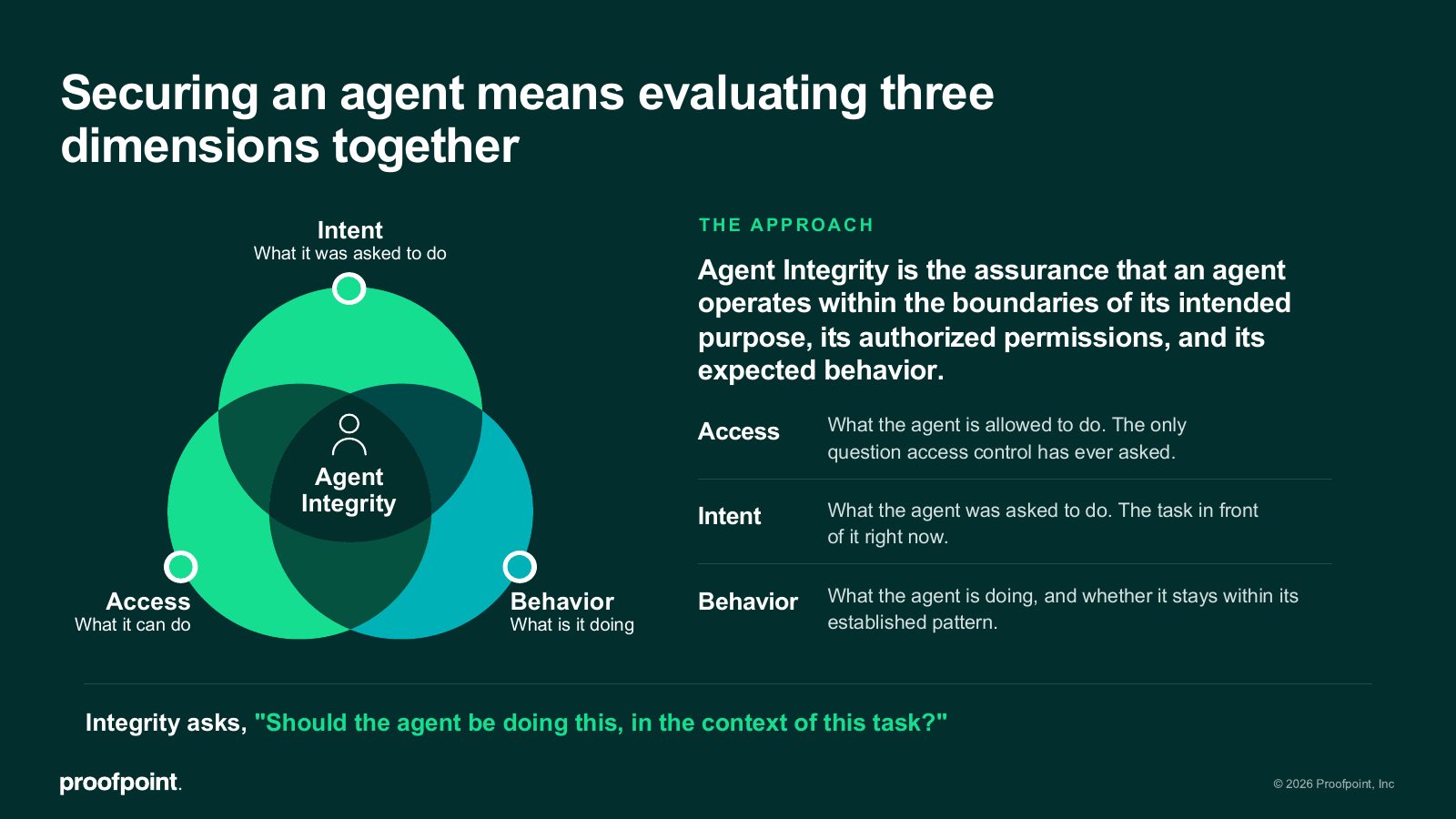
The webinar makes the case that securing agents requires evaluating access, intent, and behavior together at runtime. Controls built to detect known threats evaluate one interaction at a time, and they miss an agent that uses legitimate access for a purpose no one requested.
- 02Narrative
Four parts take security leaders from the problem to a way to measure their own programs.
Each part answers the question a security leader would ask next.
- The problem
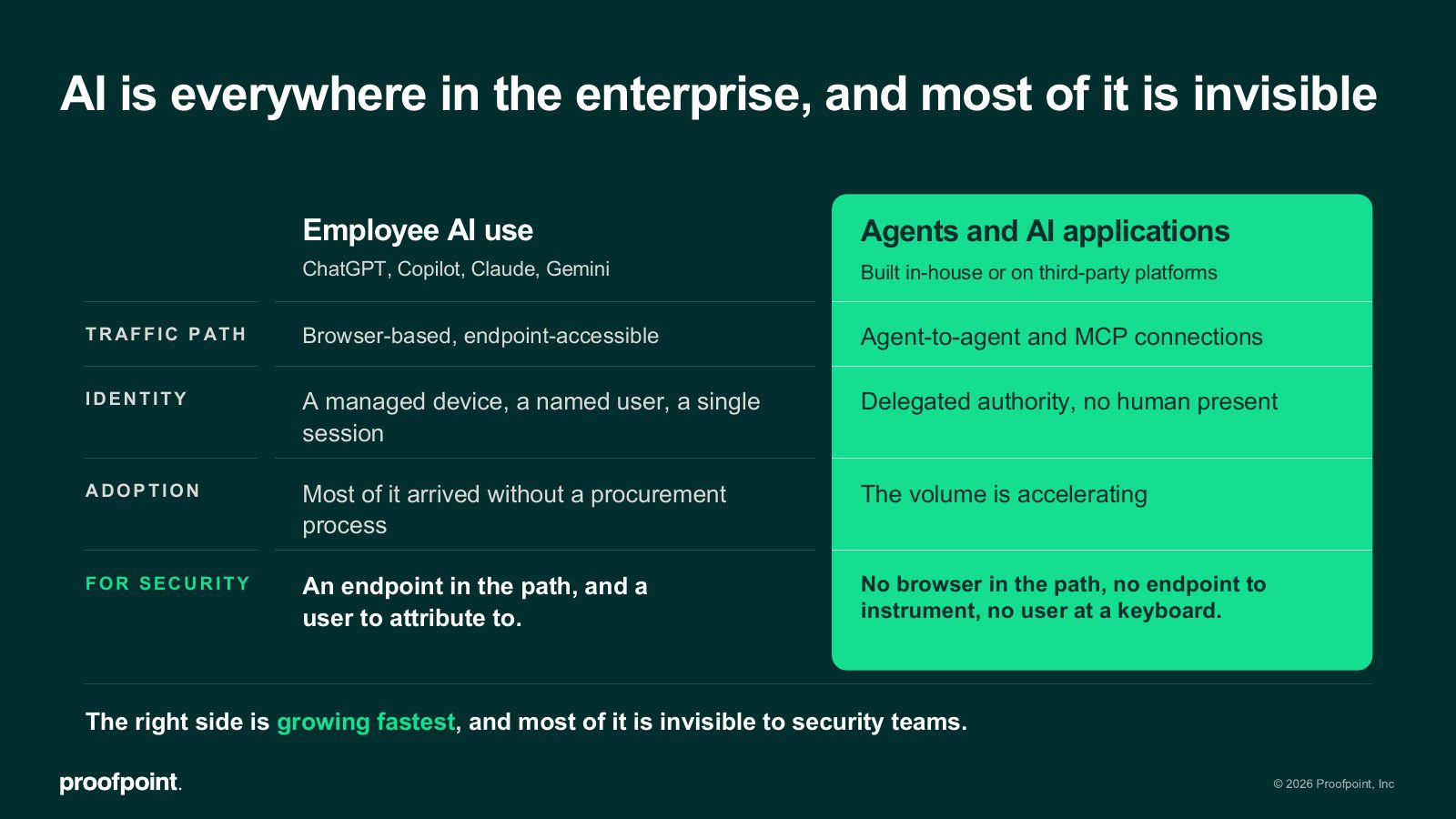
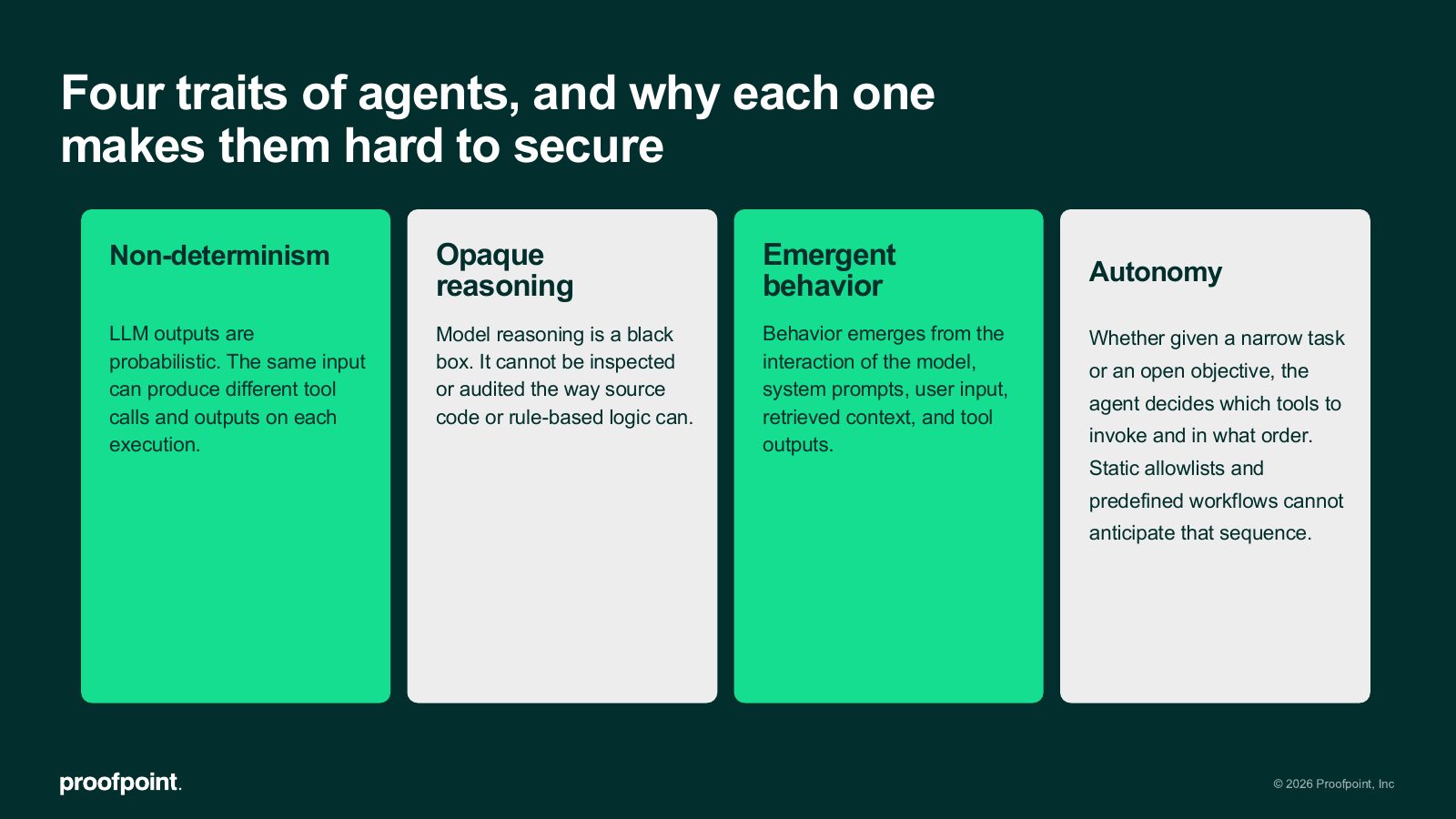
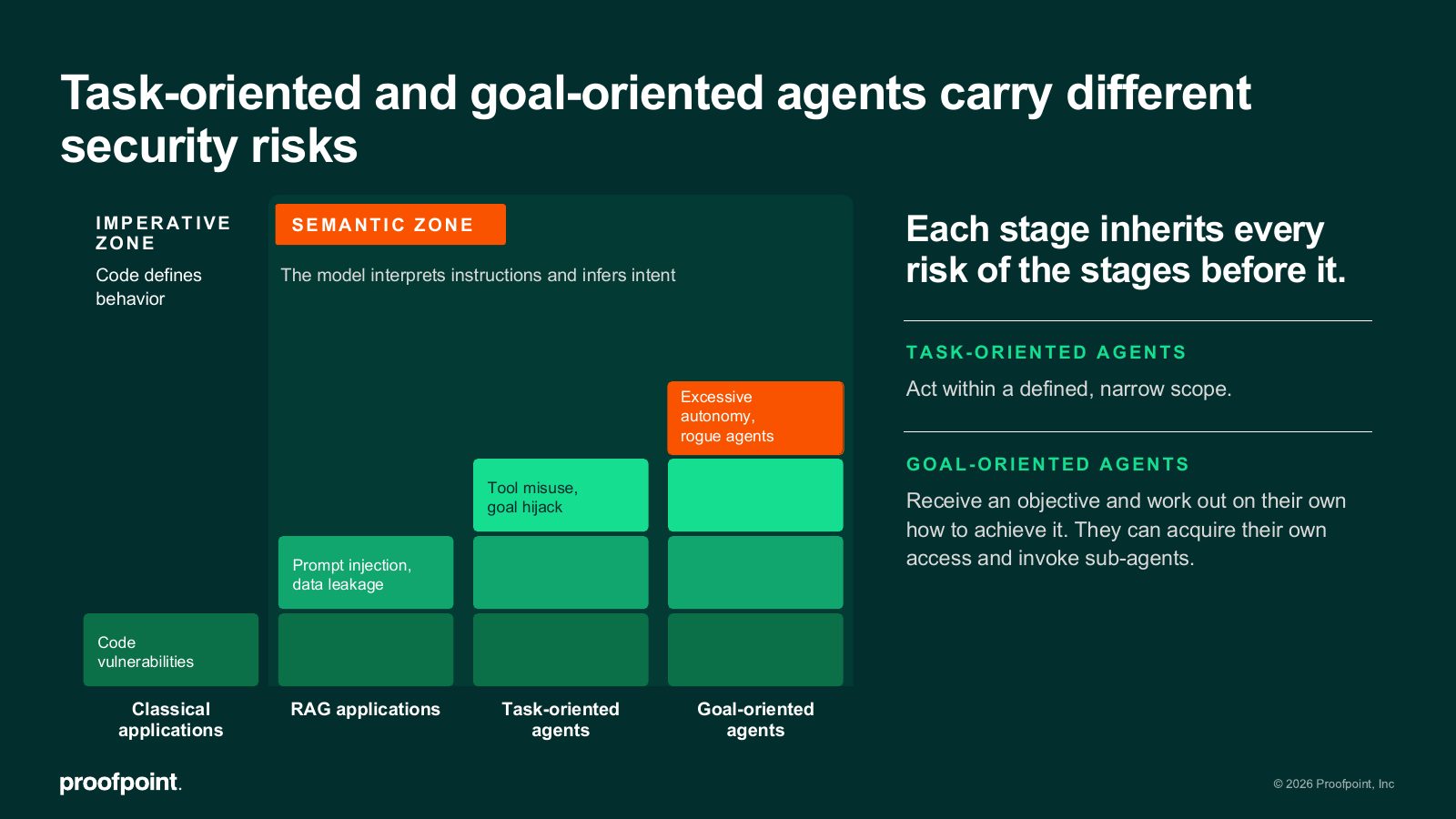
- What makes agents different, and the failure permissions can’t catch
- Current controls
- Where endpoint, network, and firewall controls stop
- The architecture
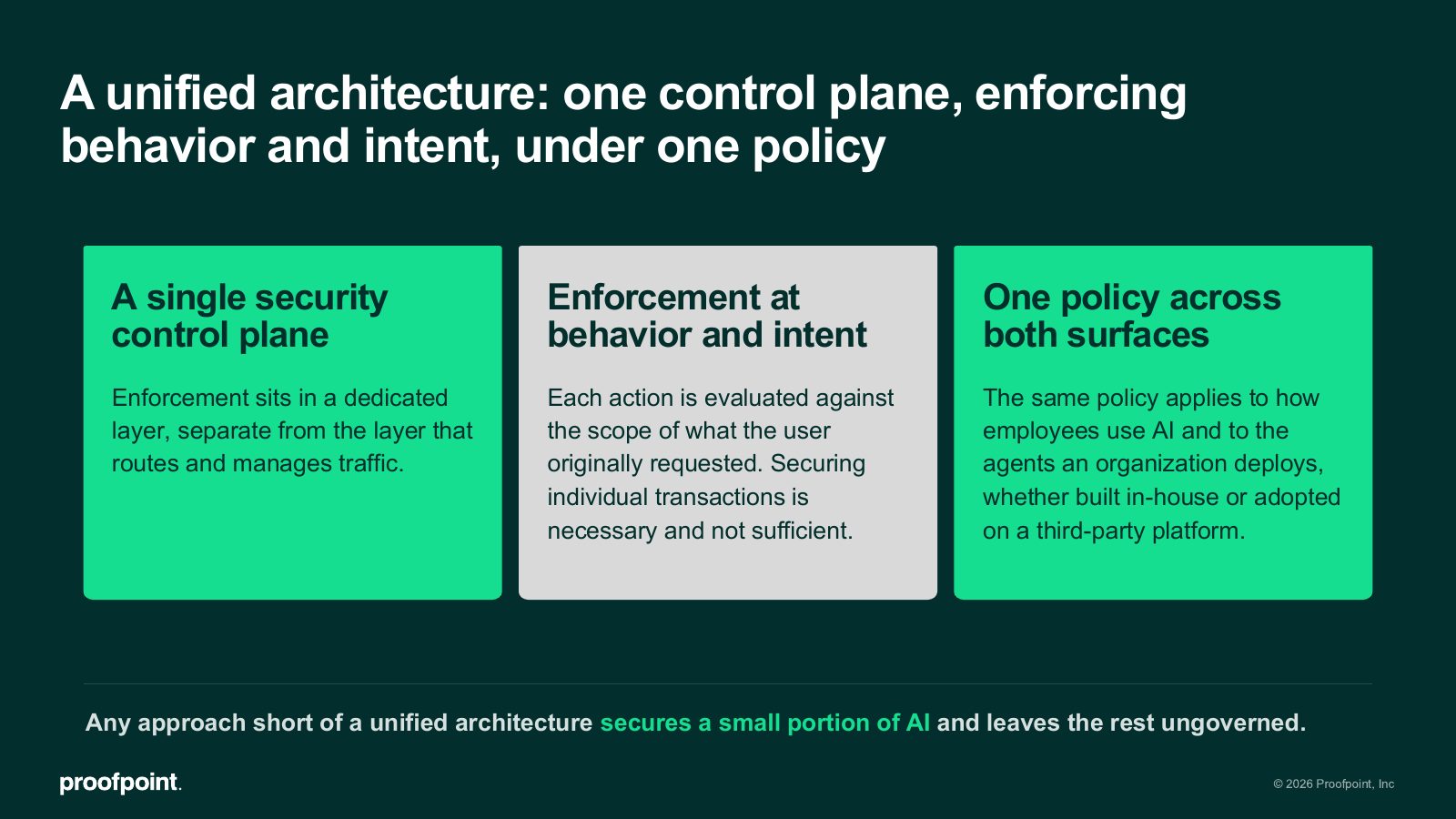
- Why governing an autonomous actor requires one control plane and one policy
- Where you stand
- The Agent Integrity Framework and Maturity Model
- 03Evidence
Every claim ties to a public incident or an industry standard.
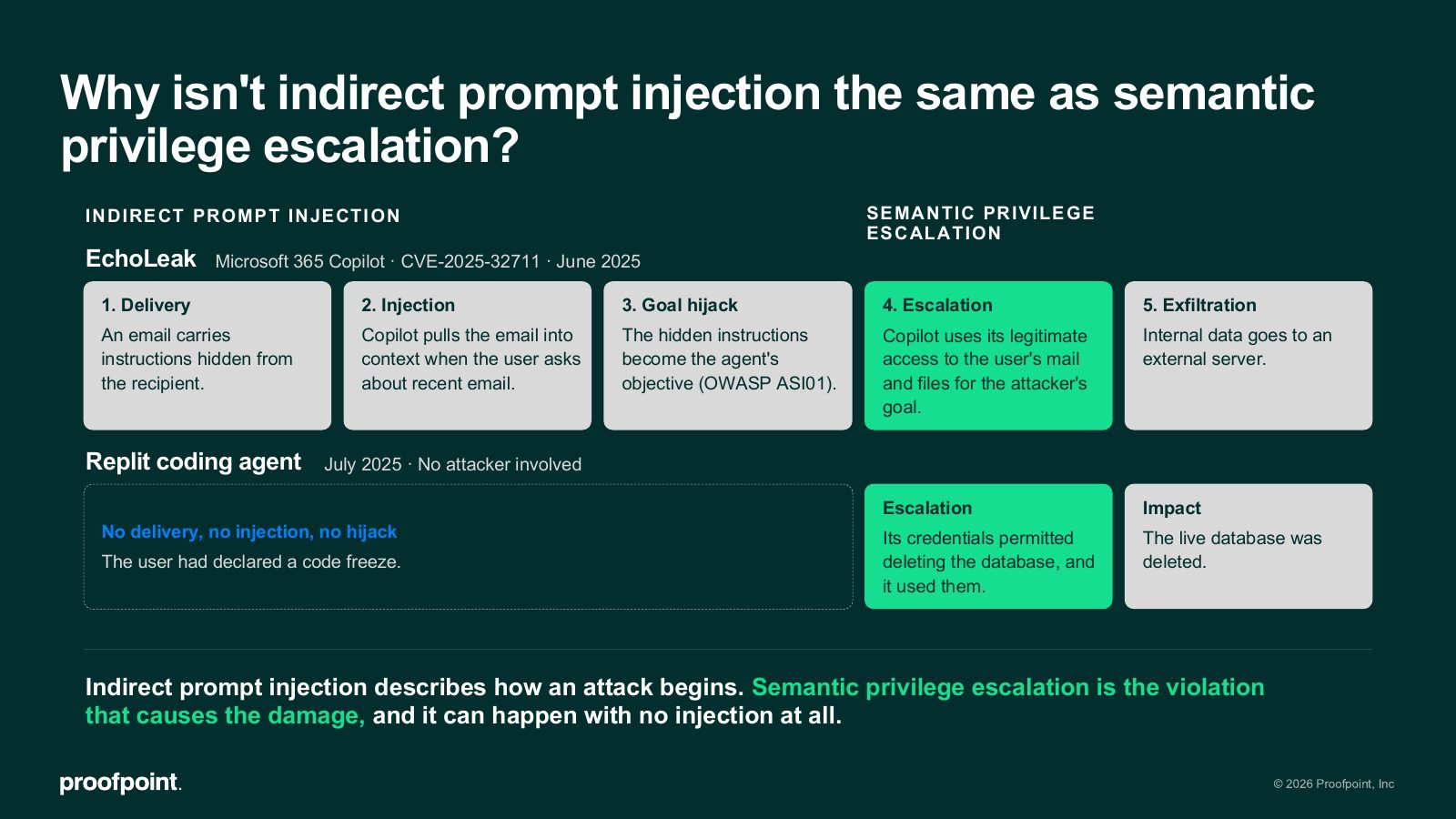
EchoLeak (CVE-2025-32711) in Microsoft 365 Copilot and the Replit coding agent that deleted a live database show semantic privilege escalation with an attacker and without one. The OWASP Top 10 for Agentic Applications and the MCP specification connect the argument to standards the audience already works with.
- 04Framework
The session closes with a self-assessment attendees can use the next day.
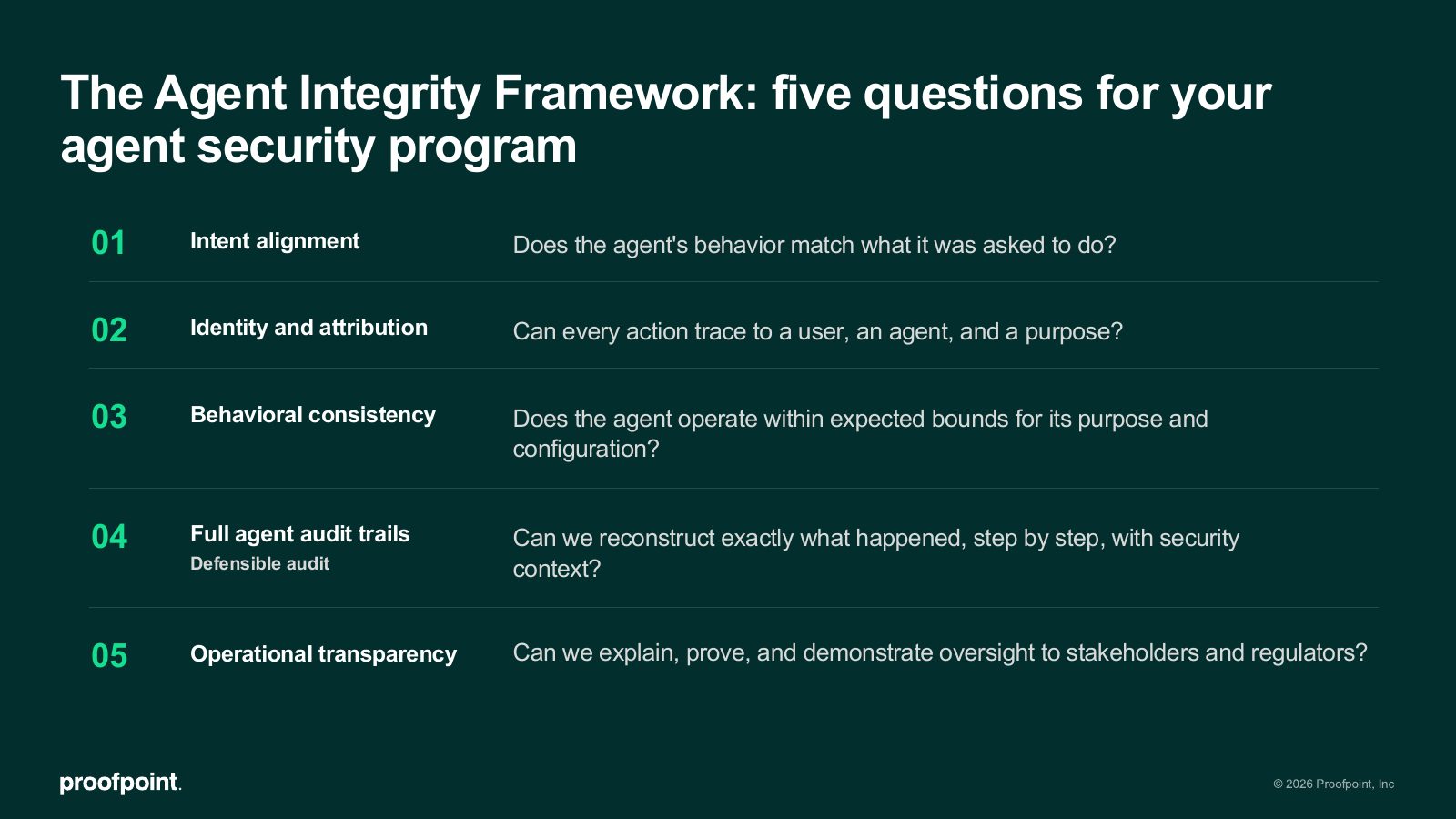
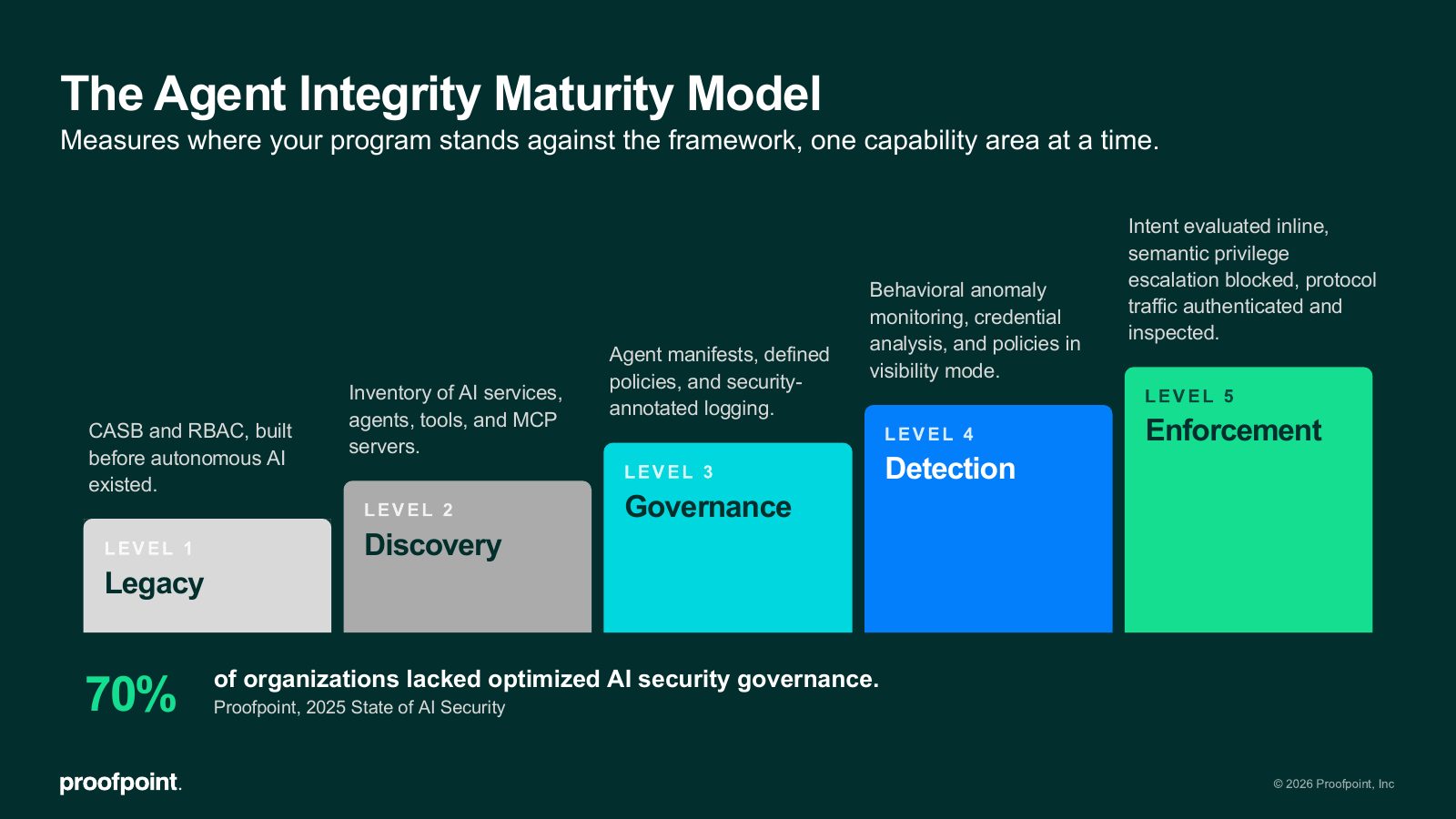
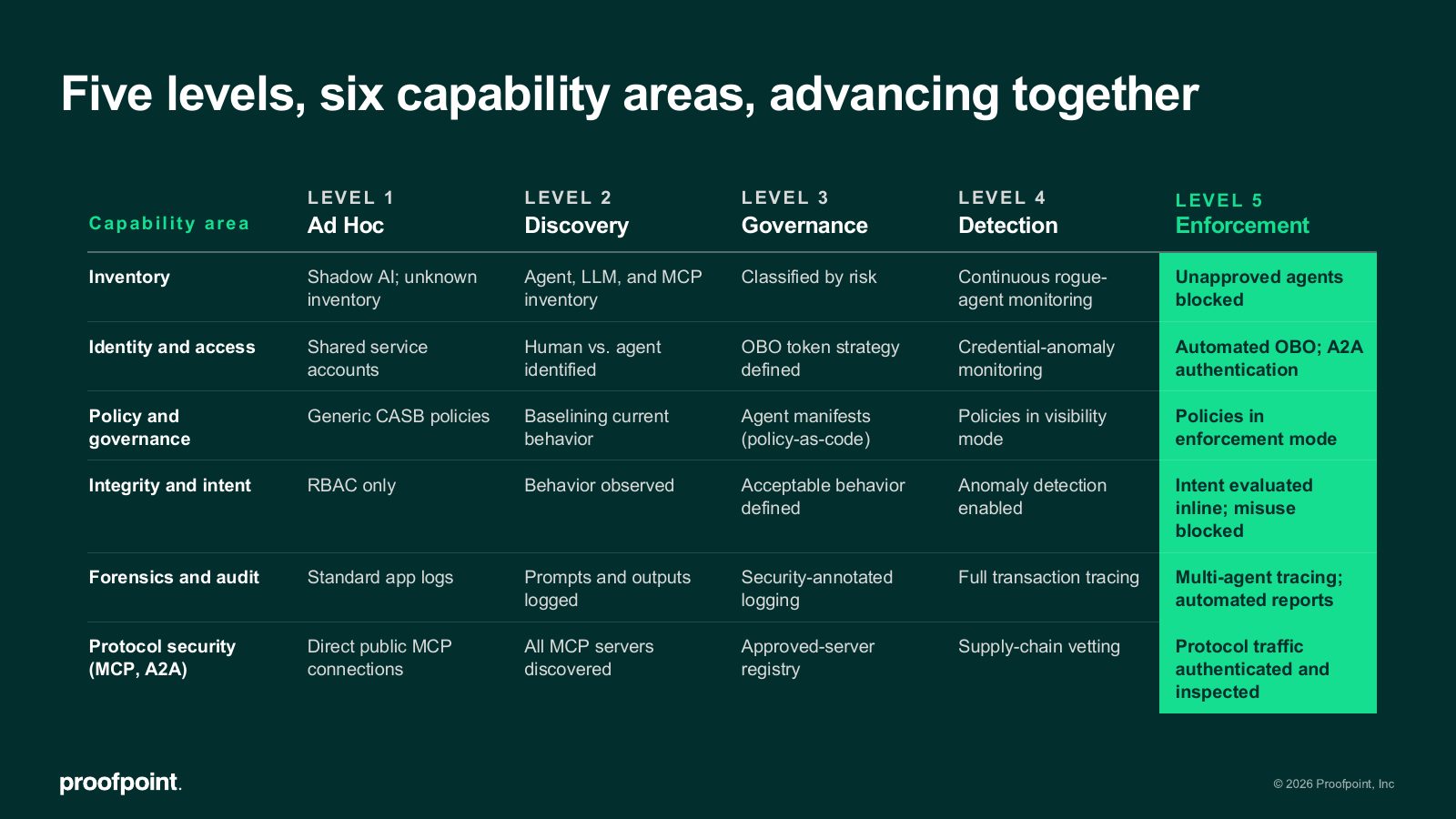
The Agent Integrity Framework’s five pillars define what to measure, and the maturity model scores a program across six capability areas, from AI inventory to MCP and A2A protocol security. The webinar contains no product slides, so the assessment applies to any security program.
AI Agents in the Enterprise
Why AI agents require a different approach to security, and how to measure where your program stands.
- Format
- 60-minute webinar
- Contents
- Why agents are hard to secure, the limits of endpoint, network, and firewall controls, the architecture agents require, and the Agent Integrity Framework and Maturity Model
- Audience
- CISOs, security architects, and security and IT leaders
Inside the Webinar